2026-10-20 · Derek Harlan
How to Choose Dumpster Size for a Dallas Home Renovation
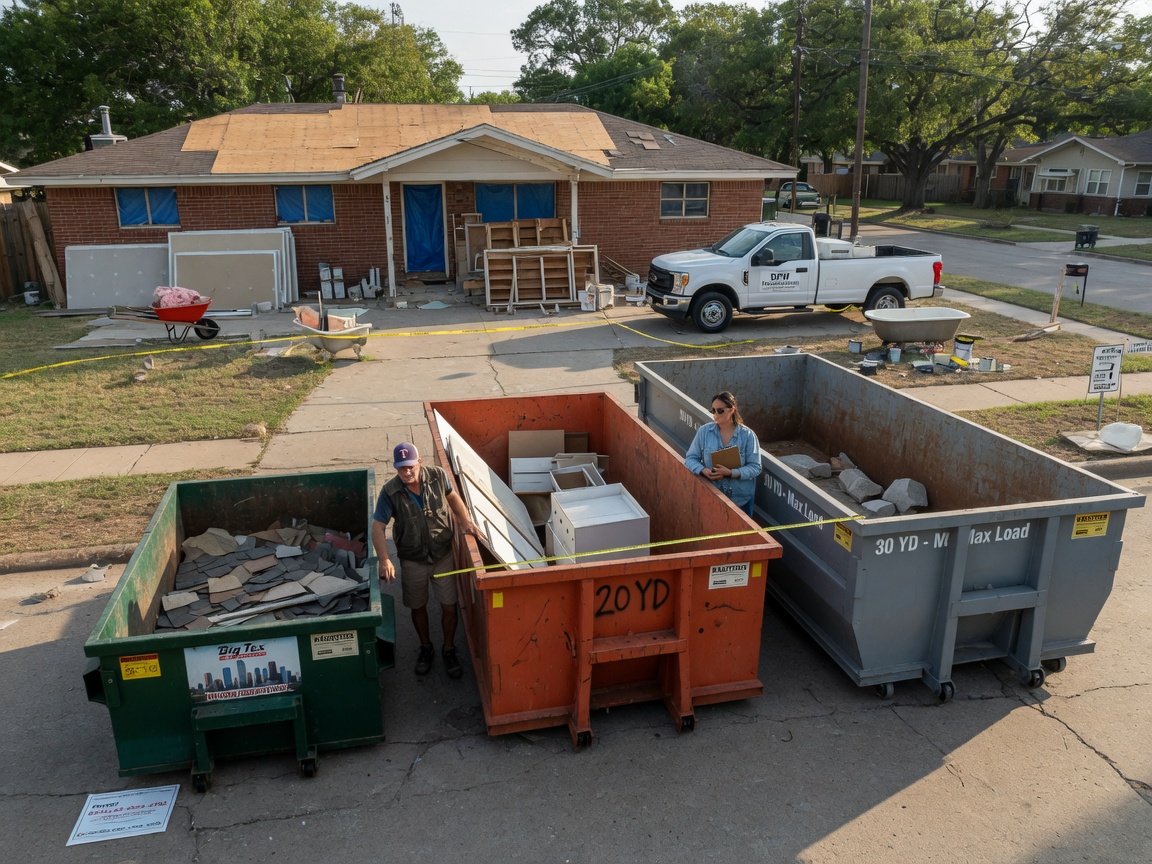
For most Dallas home renovations such as kitchen or bath updates, a 10-yard or 20-yard dumpster covers the typical debris load without excess cost. Larger full-home projects in neighborhoods with bigger lots may need 30-yard units, while tight urban sites in Uptown Dallas often stay under 10 yards to fit driveways and alleys. Matching size to actual volume prevents extra hauls or overpayment.
Matching Dumpster Size to Renovation Scope
Kitchen and bath remodels in single-family homes across North Dallas and Lake Highlands commonly generate 4 to 8 cubic yards of drywall, cabinets, and fixtures, so a 10-yard container handles the load with room to spare. Whole-house updates that include flooring removal and structural changes push totals toward 12 to 18 yards, making a 20-yard unit the practical choice. Adding a second story or attic work in older East Dallas properties can add another 6 yards of insulation and lumber, pushing some jobs into 30-yard territory. Always measure the square footage of each room being gutted and estimate one cubic yard per 100 square feet of heavy debris to stay accurate.
Local Housing Stock and Site Constraints
Many homes in Oak Lawn and Deep Ellum date to the early 1900s with narrow driveways and limited side yards, so a 10-yard dumpster often fits where a larger unit would block access. Newer construction in Plano and Arlington typically offers wider lots that accommodate 20-yard or 30-yard containers without issue. Dallas County soil tends to stay firm in mild winters, yet summer rains can soften yards enough to require plywood under the container feet. Measure your available space before ordering and confirm the unit will sit at least 10 feet from any structure to meet safety rules.
Weather and Seasonal Factors in Dallas
The humid subtropical climate brings hot summers that can soften asphalt under heavy loads, so placement on concrete pads works better during June through September. Mild winters allow year-round rentals, but sudden downpours common in spring can fill open tops with water and add weight fees. Residents in Bishop Arts District often schedule deliveries for early morning to avoid peak heat, while crews working near Klyde Warren Park watch for afternoon storms that might delay pickup. Checking the forecast before the drop-off date helps avoid these common local headaches.
Practical Steps for Final Size Selection
Start by listing every material being removed and convert that list into cubic yards using online calculators or a quick site visit. Next, walk the property to note overhead wires, gates, and slopes that limit container size. If the job spans multiple weeks, factor in one extra yard for daily accumulation. When in doubt between two sizes, the smaller unit paired with a mid-job swap often costs less than a single oversized container left sitting. For residential projects, review the full list of available options on the residential dumpster rental page to compare exact dimensions and weight limits.
Cost and Efficiency Considerations
Choosing the correct size directly affects total expense because over-ordering adds daily rental fees while under-ordering triggers extra trips. In Dallas, a 10-yard unit typically stays on site five to seven days for standard remodels, while 20-yard units handle larger loads in the same window. Linking size choice to the factors covered in what affects dumpster rental costs around Dallas helps predict the final bill more accurately. Proper sizing also reduces the chance of debris overflowing city sidewalks in dense areas like Downtown Dallas.